
How do I choose a size from a product size chart?
Measure a similar item that fits you, then compare the same points and units with the chart for the exact product option. A size letter, body-weight suggestion or parcel dimension cannot replace garment measurements. Confirm the selected size again on the order page.
- Write down the measurement method and units.
- Compare chest, length and sleeves together for tops.
- Resolve any missing or incompatible measurement before choosing.
Choose a reference item that already fits
Pick a garment with the fit you want for the same purpose. A relaxed hoodie is a better reference for another hoodie than a fitted shirt. Lay it flat without stretching it, smooth obvious folds and record how you measured it so the comparison can be repeated.
For a jacket, consider the layers you expect to wear underneath. For trousers, compare the rise and leg shape as well as the waist. A single familiar letter size can hide a very different cut, so use several relevant measurements rather than choosing from the label alone.
When comparing hoodies, read what hoodie GSM tells you alongside the garment measurements to keep fabric weight and fit as separate checks.
Measure the same points before comparing numbers
Use the diagram for a simple top without a dropped shoulder. Measure flat without stretching, then use the same starting and ending points on the seller’s chart. For a raglan or dropped-shoulder garment, request that model’s method instead of forcing this diagram onto a different construction.
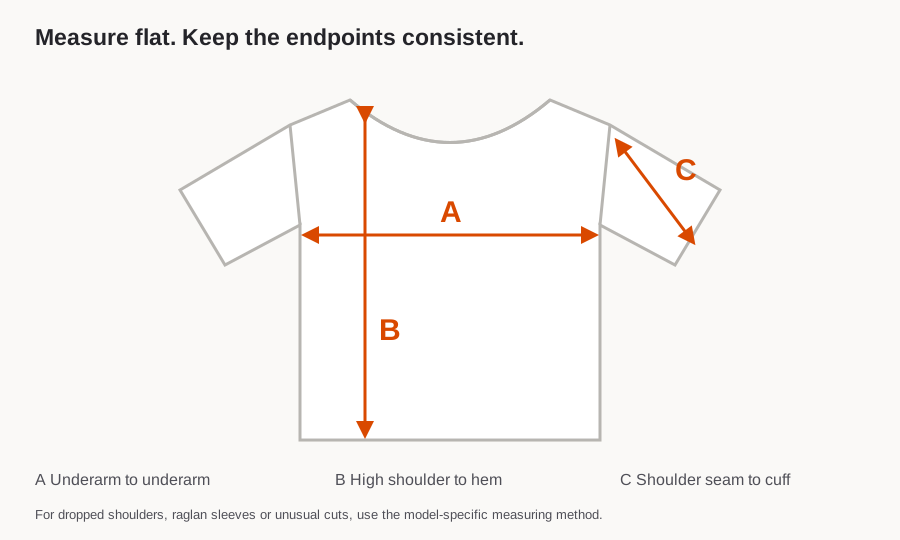
| Illustrative comparison in cm | Your well-fitting top | Candidate M | Candidate L |
|---|---|---|---|
| A — Flat chest width | 56 | 54 | 57 |
| B — Body length | 70 | 68 | 71 |
| C — Shoulder seam to cuff | 62 | 60 | 63 |
What this comparison lets you decide
With these made-up measurements, L is closer to the reference across all three points. That makes L a candidate to investigate, not a guaranteed fit. Confirm that the chart uses the same methods and check the cut and fabric. The numbers above are not a chart for any product in this catalogue.
Match the chart’s measurement method
Before comparing numbers, check whether the chart describes a body, a flat garment or a full circumference. Find the units and any diagram explaining the endpoints. If the chart does not define a measurement, ask the seller to clarify it.
| Measurement | A useful method to compare | Common confusion |
|---|---|---|
| Chest width | Flat distance across the same underarm points | Flat width versus full circumference |
| Body length | The same shoulder or collar starting point to hem | Including a collar or measuring down the back |
| Sleeve length | The same seam point to cuff | Shoulder seam versus centre-back measurement |
| Waist | The same relaxed or stretched waistband condition | Body waist versus elastic garment width |
Use unit conversions carefully
Keep your notes in one unit and convert only when needed. One inch equals 2.54 centimetres. Preserve enough precision to make the comparison useful, but do not treat a decimal conversion as evidence that a garment was measured that precisely.
A flat width and a circumference are different quantities. Doubling a flat chest measurement can provide a rough comparison with a stated garment circumference only when the methods are compatible. It is not a substitute for a seller’s body-size recommendation or a guarantee of room to move.
Example: comparing two T-shirts
Your reference T-shirt measures 54 cm across the chest and 70 cm in body length using the same endpoints as the listing’s diagram. A candidate option listed as 54 cm by 70 cm is a useful starting comparison. Still check the shoulder shape, fabric stretch and intended cut; matching two measurements does not make the garments identical.
Separate footwear measurements
Measure both feet while standing and use the longer measurement as the starting point for the seller’s model-specific guidance. Read whether the chart refers to foot length, insole length or another measurement. Those numbers answer different questions and should not be substituted for one another.
Compare a pair you own when the seller provides a compatible measurement, and think about width, toe shape and the socks you will wear. Ask the seller how its recommendation accounts for room inside the shoe. Avoid applying the same extra allowance to both a foot-length chart and an insole-length chart.
Check construction and the intended silhouette
Measurements are more useful when interpreted with the design. Dropped shoulders, a cropped body, a deep rise or a wide leg can explain why an item differs from your reference. Check the photographs and description for these features before treating the difference as a sizing error.
Consider fabric and adjustability too. An elastic waistband, adjustable strap or stretch panel may change how an item fits, but a photograph cannot quantify that range. Ask for a relevant relaxed and stretched measurement if your choice depends on it.
For headwear, use the fitted, adjustable and stretch-fit hat size guide to compare head circumference with the correct sizing system.
Confirm the exact option and review your own item
The sizes displayed on the local detail page are a saved preview. Selecting a chip does not reserve stock or transfer a choice into an external order. Select the style and size again on the destination page, confirm the applicable chart and review the option summary before paying.
When your own item is inspected, compare the size label and any requested measurements with that summary. Package dimensions and parcel weight do not establish garment fit. If a measurement is missing or inconsistent, ask a precise question before approving international shipment.
Treat weight-based size hints separately from garment measurements
Some sellers include body-weight suggestions in their size labels. Those suggestions are not measured chest width or sleeve length and cannot show whether a garment matches your preferred fit. Compare actual garment dimensions using the same method as your reference item.
Parcel dimensions describe a shipping sample. Keep them out of your clothing-size comparison. Before choosing a size, request flat chest width, body length and the correct sleeve method for the exact option.
Before you continue
- Compare measurements using the same method and units.
- Treat clothing labels, body measurements and flat garment dimensions separately.
- Confirm the chart and availability for the exact option on the order page.
Frequently asked questions
Should I always size up when buying from a spreadsheet?
There is no universal adjustment that works for every model, cut and seller. Use the exact option’s chart and a reference item measured in the same way. Ask for missing measurements instead of treating a general size-up rule as evidence.
What if my reference measurement falls between two options?
Compare the other measurements and the fit you want, then ask the seller for guidance using your actual numbers. Consider layering, shape and stretch. Choose only after you understand the compromise; one larger measurement may also change length or proportions.
Can I use the package dimensions shown below QC photos?
Those dimensions may describe a sampled parcel rather than the product itself. Use a clearly identified garment or footwear measurement for fit. If the record does not explain what was measured, treat that value as unresolved.